

Can Dogs Have Cinnamon? A Veterinary-Focused Safety Guide
Cinnamon is a widely used culinary spice appreciated for its aroma and flavor, but when it comes to canine health, understanding its safety profile requires careful veterinary interpretation. Although cinnamon isn’t inherently toxic to dogs in small, controlled doses, excessive exposure, especially in concentrated forms, can lead to significant adverse effects. This article thoroughly examines current evidence, clinical concerns, risk mitigation, and practical recommendations for veterinary practice, drawing on authoritative sources and toxicology guidance.
- Cinnamon is not classified as toxic to dogs in small amounts. It can be safely ingested in minute quantities under veterinary supervision.
- Cinnamon essential oil and concentrated extracts are highly hazardous, even at low exposure.
- Inhalation of powdered cinnamon can cause respiratory distress, especially in small breeds or those with airway disease.
- The compound coumarin, abundant in Cassia cinnamon, poses a liver risk if chronically ingested in large amounts.
- Human foods containing cinnamon may introduce other toxic agents, such as xylitol or nutmeg.
What Cinnamon Is: Chemistry and Canine Physiology
Cinnamon derives from the inner bark of Cinnamomum tree species, with Cassia and Ceylon being the most common. Key compounds include cinnamaldehyde, eugenol, and coumarin, each with different metabolic implications. Dogs metabolize these compounds less efficiently than humans, especially coumarin, which can exert hepatotoxic effects at elevated dosages.
In veterinary toxicology, dosage and form are primary determinants of clinical risk. Ground cinnamon in trace culinary amounts presents minimal acute toxicity, whereas cinnamon essential oil, a concentrated source of toxic constituents, can rapidly overwhelm canine detoxification pathways once ingested or absorbed dermally.
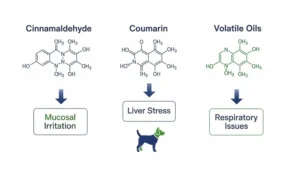
Key Cinnamon Compounds
- Cinnamaldehyde: Provides flavor but can irritate mucosa at high concentrations.
- Coumarin: Metabolized in the liver; high intake is associated with hepatic stress in canines.
- Volatile oils: Present in essential oils; potent bioactivity with narrow safety margins.
Evidence on Cinnamon Safety in Dogs
Non-Toxicity at Low Levels
Cinnamon isn’t listed on standard canine toxicology charts as a poisoning agent at small doses. Most sources agree that ingestion of a pinch or trace amounts in food does not lead to systemic toxicity.
However, veterinary toxicologists caution that inhaled cinnamon powder can provoke significant airway irritation resulting in coughing, choking, and bronchospasm, situations that warrant clinical intervention.
Toxicity Thresholds
There is no universally published toxic dose for cinnamon powder in dogs, but anecdotal guidance suggests that amounts greater than a teaspoon may precipitate gastrointestinal and metabolic disturbances in average-sized dogs. Smaller breeds can experience adverse effects at lower exposures.
Essential Oils and Concentrates
Cinnamon essential oil contains concentrated phenolic compounds that are significantly more potent than ground spice. Veterinary sources uniformly classify these oils as unsafe for dogs via ingestion or dermal exposure, as they can induce severe irritation and systemic toxicity.
Potential Health Benefits: Clinical Evidence and Limits
Although cinnamon is reputed to have antioxidant and anti-inflammatory properties in humans, robust evidence in dogs is lacking and largely extrapolated from human or rodent studies. Claims regarding improved glycemic control or inflammatory modulation in canines remain speculative without controlled clinical trials.
Antioxidant Potential
Cinnamon’s phenolic compounds can theoretically scavenge free radicals; while this has been documented in vitro, the actual systemic benefits for dogs at safe dosages are unverified.
Blood Sugar Regulation
Some veterinary nutrition discussions raise cinnamon as a possible adjunct for glycemic modulation in diabetic dogs, but such use must be medically supervised due to risks of hypoglycemia and interactions with insulin or oral hypoglycemics.
Inflammatory Conditions
While anti-inflammatory effects are documented in other species, any therapeutic application in dogs should proceed with caution and rely on evidence-based dosing, which is currently undefined.
Insight: As clinical evidence grows, cinnamon may find niche applications as a complementary agent, but this requires rigorous veterinary trials before broad recommendations.
Routes of Exposure and Clinical Implications
Ingestion of Cinnamon Powder
A small amount mixed into food is generally safe, but veterinarians should educate clients about:
- Gastrointestinal irritation
- Potential hypoglycemia with chronic use
- Coumarin-related liver stress
Inhalation
Accidental inhalation can mimic inhalant injury, with signs such as coughing and respiratory distress. In such cases, supportive airway management and oxygen supplementation may be warranted.
Essential Oils
Due to their concentrated bioactivity, cinnamon essential oils require immediate veterinary evaluation if a dog licks, ingests, or has dermal exposure. Systemic absorption can lead to significant sequelae.
Cinnamon Sticks
These pose both mechanical hazards (choking/obstruction) and potential mucosal irritation when chewed.
Clinical Signs of Cinnamon Overexposure
Veterinary clinicians should recognize the following signs associated with excessive cinnamon exposure:
- Vomiting and nausea
- Diarrhea and abdominal discomfort
- Low blood sugar symptoms (e.g., weakness, tremors)
- Elevated liver enzymes (chronic exposure)
- Respiratory irritation post-inhalation
Early detection and supportive care are fundamental to favorable outcomes.
Diagnosis and Veterinary Management
History and Exposure Assessment
A detailed dietary history should capture:
- Type and amount of cinnamon
- Whether essential oils were involved
- Onset of clinical signs
Diagnostics
- CBC, serum biochemistries (including liver panel)
- Blood glucose
- Thoracic imaging if respiratory distress is present
Treatment Algorithms
- No ingestion with mild symptoms: monitor and supportive care
- Moderate to severe signs: IV fluids, antiemetics, hepatic protectants
- Inhalation injury: nebulization, oxygen therapy, bronchodilators
Safe Guidelines for Veterinary Practice
Although cinnamon can be safe in trace amounts, veterinary professionals should advise clients that:
- Cinnamon should never be a regular dietary supplement unless clinically justified.
- Ceylon cinnamon is preferable to Cassia due to lower coumarin content.
- Cinnamon essential oils should be strictly avoided in dog environments.
Cinnamon in Commercial Dog Treats: What to Consider
Many pet treats include cinnamon flavoring. In evaluating commercial products, clinicians should review:
- Ingredient authenticity
- Total cinnamon concentration
- Absence of other toxic additives (e.g., xylitol, chocolate)
Case Reports and Clinical Experiences
Although big-data veterinary studies are scarce, clinical anecdotes suggest that:
- Mild gastrointestinal upset is common with accidental ingestion of small amounts.
- True toxicity is rare but possible with essential oil exposure or chronic high intake.
Veterinarians should document such cases to build evidence and improve future management protocols.
Differential Diagnosis: Similar Presentations
Symptoms from cinnamon exposure may overlap with other exposures (e.g., nutmeg, xylitol, raisins). A careful differential diagnosis is crucial in emergency settings.
Risk Communication and Client Education
Clinicians should empower owners with clear guidance:
- Moderation is key
- Recognize non-toxic vs toxic forms
- Seek immediate veterinary care for concerning signs
When Cinnamon Is Contraindicated
Avoid cinnamon in dogs with:
- Liver disease
- Diabetes requiring medication
- Known spice sensitivities
Research Gaps and Future Directions
There remains a need for controlled trials on:
- Dose-response effects of cinnamon in dogs
- Long-term safety profiles
- Pharmacokinetics of cinnamaldehyde and coumarin in canines
Evidence-Based Summary for Veterinary Clients
To inform clients succinctly:
- Yes, small amounts of cinnamon are generally safe under supervision.
- No, essential oils and high-dose exposures are unsafe.
- Cinnamon should not replace evidence-based medical treatments.
Key Takeaways for Clinical Practice
- Cinnamon is non-toxic in small culinary amounts.
- Essential oils are dangerous at low doses.
- Client education reduces accidental exposures.