
Gerbil Care Guide UK: Housing, Diet, Handling and Costs
Gerbils are small, busy and surprisingly entertaining pets. They dig tunnels, thump their back feet when startled, stash food in secret chambers and spend much of the day rearranging their home. They suit older children and adults who want a pet they can watch and interact with, but they are not an impulse buy. A gerbil kept properly needs a deep glass tank, a companion of its own kind, and a daily routine that takes only a few minutes once the setup is right. This guide covers the right home, the right food, safe handling, health checks and the real UK costs, so you can decide whether gerbils fit your home before you bring a pair home.
Are Gerbils the Right Pet for You?
The pet gerbil is the Mongolian gerbil, Meriones unguiculatus. About 90 gerbil species exist in the wild, but this is the one kept as a pet in the UK. Adults weigh roughly 50 to 90 grams and measure about 10 cm in body length, plus a furry tail of a similar length. They live for three to four years, according to the Blue Cross, so taking on gerbils is a commitment of several years, not a few months.
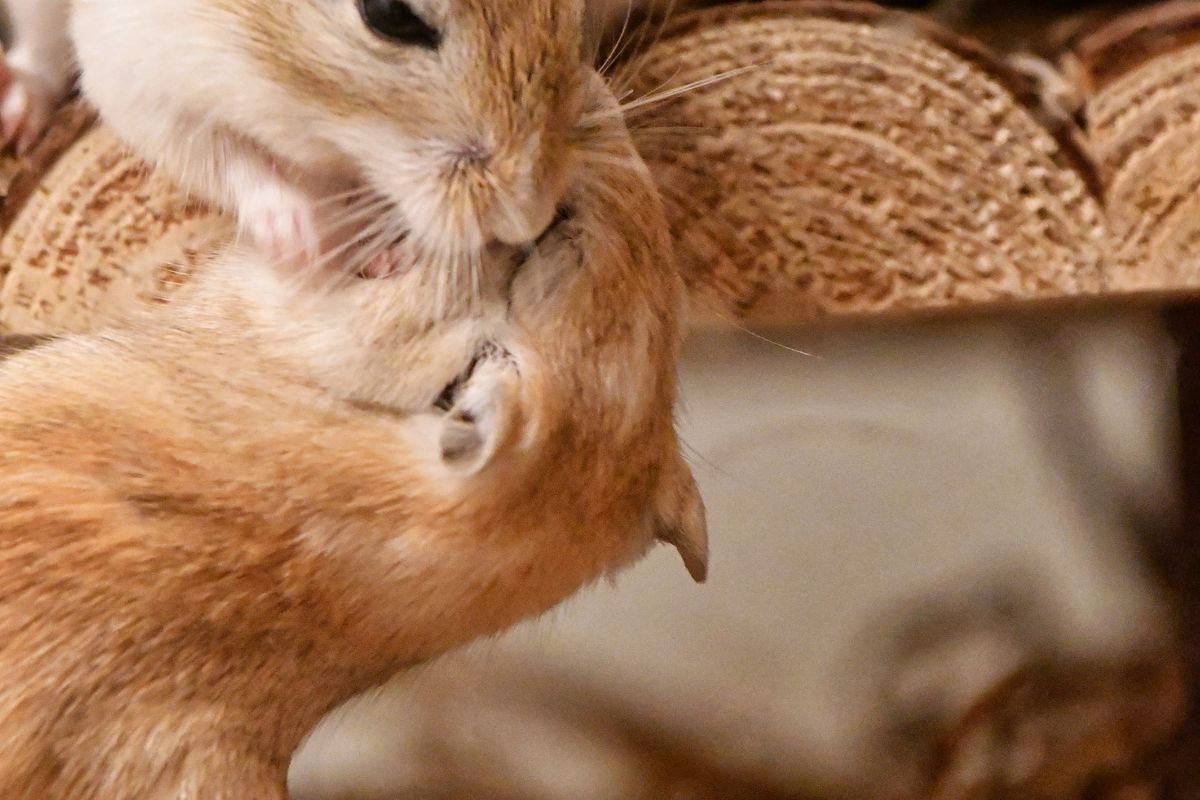
Gerbils are sociable animals and should never be kept alone. In the wild they live in family groups of two to 15 animals, and a lone gerbil is a lonely gerbil. Buy a same-sex pair or small group from the same litter, ideally two females or two males that have grown up together. Adult gerbils rarely accept a newcomer, so do not plan to add a friend later. If you must introduce young gerbils, house them separately but next to each other for about a week first, swapping some used bedding between the two homes.
Gerbils are mostly active during the day, which is one of their biggest advantages over hamsters. You will actually see them digging, foraging and playing while you are awake. They do not enjoy being picked up and cuddled the way some pets do, and they are quick and wriggly in the hand, so they suit older children better than very young ones. An adult should always be responsible for their day-to-day care. If you are still weighing up small pets, our hamster care guide explains how the two differ, and our rabbit care guide and guinea pig care guide cover the other popular choices.
How Much Do Gerbils Cost in the UK?
Gerbils themselves are cheap. Pet shops and breeders in the UK usually charge under £10 per gerbil, and bonded pairs advertised on Pets4Homes typically sell for £20 to £30. Rescue centres are often cheaper still and usually ask only a modest adoption donation, so check your local rescue first. Never buy gerbils younger than six weeks old, and check that the seller keeps them in a clean, roomy home with deep bedding and enrichment.
The real money goes on the setup, not the animals. A complete budget setup for a pair, including the tank, bedding, food, water bottle, wheel and chews, costs roughly £60 to £90. A mid-range setup with a larger gerbilarium and a silent wheel runs to about £120 to £200. After that, running costs are low: a bag of gerbil food and a bale of bedding each month costs only a few pounds. The cost people forget is the vet. Register with a vet experienced in small mammals or exotics as soon as your gerbils arrive, and keep a small contingency fund aside, because even a tiny animal can need an unexpected consultation or dental treatment.
Setting Up the Perfect Gerbilarium
The single most important decision is the home. Get this right and most other problems never appear.
Choosing the right home
Gerbils need a gerbilarium, a deep glass tank with a secure wire-mesh top and a solid floor. The RSPCA recommends this design because it holds deep bedding, gives good ventilation and stops escapes. Barred cages are not recommended: gerbils can slip between bars and injure their legs, and they gnaw on bars, which can damage their teeth. Plastic tanks are a poor choice too, because gerbils chew through plastic in hours. Aim for at least 100 x 40 cm of floor space for a pair, with a tank about 50 cm high, and go bigger if you have the room. UK welfare guidance quoted from the RSPCA suggests a minimum floor space of 80 x 50 cm for a pair, and the Cheltenham Animal Shelter recommends at least 1 m x 40 cm x 40 cm or a 20-gallon (90-litre) glass tank. The lid must fit tightly and clip or lock shut, because gerbils are excellent escape artists.
Bedding deep enough to dig
In the wild, gerbils dig burrows that reach 1.7 metres underground and stretch six to eight metres sideways. Deep bedding lets your pets build real tunnels, and tunnelling is the behaviour that matters most to them. The RSPCA recommends a bedding depth of 20 to 30 cm, with the tank tall enough to leave room above ground for the gerbils to stand fully upright. An adult gerbil is about 12 cm tall, which is why a tank of around 50 cm high works well. Use a mix of rough-grained woodchips and hay, which gives tunnels their structure and something to gnaw. Paper-based bedding mixed with hay works too. Do not use sawdust or wood shavings, as these can cause breathing problems, and do not use soil from your garden, which may carry bacteria or parasites. Add a small pile of soft hay on the surface every couple of days and let your gerbils pull it down into the nest themselves.
Where to put the gerbilarium
Keep the gerbilarium indoors, somewhere dry, draught-free and out of direct sunlight, and away from radiators. The ideal temperature range is 20 to 24°C. Gerbils communicate using ultrasonic frequencies, so they are sensitive to sounds we cannot hear: keep their home away from televisions, computer screens, vacuum cleaners and running water. A quiet corner of a living room or a spare room works well. Avoid bedrooms if your gerbils are active at night, as their digging and wheel-running will keep light sleepers awake.
What Do Gerbils Eat?
Gerbils come from dry grasslands and eat a dry, seed-based diet in the wild. Copy that at home and their digestion stays settled.
The daily diet
The base of the diet should be a complete dry gerbil food, either a uniform pellet or a good-quality gerbil mix. Follow the serving guidance on the packet, and scatter small amounts of the dry food across the surface of the bedding instead of piling it all in a bowl. Scattering encourages natural foraging, slows down greedy eaters and keeps your gerbils busy. Fresh water must always be available in a bottle fixed to the tank, refilled and cleaned daily. Bowls are not a good idea, as gerbils tip them over and fill them with bedding within minutes.
Fresh food and treats
Fresh food is a treat, not the main meal. Two or three times a week, offer a fingernail-sized piece of something fresh: carrot, cucumber, broccoli, pepper, a little apple without seeds, pear or melon. The Scottish SPCA also lists boiled egg, fresh grass, dandelions and pumpkin as suitable extras. Introduce new foods one at a time and in tiny amounts, because too much fresh food at once can cause diarrhoea in desert animals that are not used to wet food. A single sunflower seed or pumpkin seed makes a good training treat, but seeds are fatty, so keep them rare.
Foods to keep out of the cage
Some everyday foods are dangerous for gerbils. Never offer chocolate, onion, garlic, citrus fruit or anything sugary or salty, including biscuits, crisps and sweets. Avoid raw beans, green potatoes and apple seeds. For chewing, offer willow, hazel, beech, birch or branches from fruit trees. Never give branches from ivy, yew or holly, which are poisonous. A large smooth stone in the gerbilarium helps wear down their claws and gives them something to scent-mark, which is a normal and important behaviour for them.
Handling and Taming Your Gerbils
Gerbils can learn to trust you, but they need patience and a predictable routine. Start by spending time near the tank, talking quietly so they learn your voice and your presence. Then offer food from your open hand, letting them come to you rather than reaching in and grabbing them. Once they are comfortable, use the scoop technique: place both hands either side of the gerbil and scoop it up gently to form a cup shape. Keep handling sessions short, calm and close to the ground or over a soft surface.
Never pick a gerbil up by its tail. The tail is delicate and can be seriously injured, and the fright will undo weeks of patient taming. Handle your gerbils every day once they are used to you, but never force it if they are hiding or thumping their back feet. Rapid foot-thumping is a gerbil’s alarm signal, and it means the whole group will dive for cover. Always supervise children with gerbils, and never leave gerbils out of their gerbilarium unattended or overnight.
Enrichment: Keeping Gerbils Busy
A bored gerbil chews bars, digs obsessively in one corner and paces. A busy gerbil does none of those things. Deep bedding is the most important enrichment you can give them, but a few extras make a real difference. Give them a solid exercise wheel with a large diameter, at least 28 cm, so their back stays straight while they run. It should have a solid running surface and no axle that a tail can catch on. Add wooden tunnels and tubes at least 5 cm across so nobody gets stuck, and avoid plastic tunnels, which gerbils gnaw and swallow. Cardboard toilet-roll tubes, small wooden boxes and a nest box filled with plain paper all make good hides. A shallow tray of clean chinchilla sand, offered daily, lets them bathe and keeps their coat in good condition. Sieve the sand clean after they have used it.
Daily and Weekly Care Routine
Daily care takes about five minutes. Check that both gerbils look bright and active, that they are eating and drinking, and that their front teeth look straight and even. Gerbils’ teeth grow continuously, so they need to gnaw every day to keep them worn down. Refill the water bottle, scatter the day’s food, remove droppings and any uneaten fresh food, and offer the sand bath. Watch for anything unusual while you do it, because knowing what your gerbils normally look like is how you spot illness early.
Every few days, remove soiled bedding and top it up. Every two to three weeks, deep-clean the whole gerbilarium with a pet-safe disinfectant and replace the bedding. Keep back a small handful of clean, dry used bedding to mix in with the fresh batch, because a home that smells entirely new can stress gerbils. They recognise each other and their territory partly by scent, and a complete scent wipe can unsettle a bonded pair.
Common Health Problems and Warning Signs
Healthy gerbils are bright-eyed, active and keen on food, and the problems owners see most often are preventable. Overgrown teeth are the biggest one: if the front teeth grow too long, a gerbil may stop eating altogether, so check them during your daily routine and ask your vet to look at them at check-ups. Sore feet can follow from a wire or mesh wheel, which is why a solid running surface matters. Obesity creeps up when sunflower seeds and sweet treats are given freely, so keep treats small and infrequent. Diarrhoea usually follows too much fresh food or a sudden diet change.
See a vet promptly if a gerbil stops eating, has diarrhoea, loses weight, develops a lump, breathes with effort or becomes suddenly aggressive towards its cage mate. Separate fighting gerbils at once and take the injured one to the vet, because gerbil fights can cause serious wounds. Aggression between adults that once lived happily together sometimes means pain or illness, so it is worth a check-up rather than assuming they have simply fallen out. For general pet health habits, our ultimate guide to pet care, health and happiness covers the basics that apply to every pet in the home.
Where to Get Gerbils in the UK
Start with a rescue centre. Charities such as the Blue Cross regularly have gerbils looking for homes, often because an owner’s circumstances changed, and the staff can match you with a bonded pair that suits your household. If you buy from a pet shop or breeder instead, check that the animals are at least six weeks old, that the staff handle them confidently, and that the cages are clean, roomy and full of enrichment. Ask what the gerbils have been eating so you can keep the same food for the first week and change it gradually. Bring a secure carry case, and set the gerbilarium up before you leave the house, so your new pets can go straight into a finished home.
Final Thoughts
Gerbils reward owners who get the basics right. A deep glass tank with 20 to 30 cm of bedding, a same-sex companion, a dry balanced diet, a sand bath and a few minutes of attention every day will give you three to four years of watching two of the busiest little animals you can keep indoors. They are not the cheapest pets to set up properly, but they are among the cheapest to run, and few pets offer so much daytime activity for so little money. If that sounds like the right fit for your home, start with a rescue centre, buy the biggest gerbilarium you can fit, and let your gerbils do the digging.